Reopening applications for the PSF’s Meetup Pro Network is a small but meaningful step forward for our community support-focused programs. The rest of the PSF Grants Program remains on hold while we work through important considerations, such as what we can responsibly budget and how the program will be structured for long-term sustainability. We look forward to sharing more updates when possible.
The PSF welcomes your comments, feedback, and suggestions regarding the reopening of the PSF Meetup Pro Network on the corresponding Discuss thread. We also invite you to join our upcoming PSF Board or Grants Program Office Hour sessions to talk with the PSF Board and Staff synchronously. If you wish to send your feedback privately, please email grants@python.org.
About the PSF’s Meetup Pro Network
The PSF manages a Meetup Pro account and adds qualified Python-focused Meetup groups to the overarching PSF Meetup Pro Network. Meetup organizers no longer pay for Meetup subscriptions once they become part of the PSF’s network. We currently have 109 groups in the PSF Meetup Pro Network, which costs the PSF $15/month per group.
The PSF can run reports on Meetup activity, such as the number of interested attendees and events. Management of membership and events is left to the group’s organizers. Any registration fees or deposits for RSVPing or paying for registration to an event are also managed solely by the Meetup organizer.
Once a Meetup organizer accepts the invite to join, a notation will be shown under the group name: “Part of Python Software Foundation Meetup Pro Network.” Check out the Meetup Pro overview page for more information.
Criteria and how to apply
We've made the application process and criteria as simple as possible, so Python Meetup groups around the world can easily get the support they need. Along those lines, we’ve kept the requirements short and sweet—to qualify for the PSF’s Meetup Pro Network, a Meetup group must:
Offer content that is majority Python related
Include or link to a Code of Conduct in the About section of the Meetup page
Hold at least 2 events per year (virtual or in-person)
To apply, fill out the short application form on psfmember.org, that asks for basic contact information, as well as gathers information related to the criteria listed above. Make sure you have an account on psfmember.org and that you’re signed in! A PSF Staff member will reach out with any questions or provide the steps needed to add eligible groups to the PSF Meetup Pro Network.
About the Python Software Foundation
The Python Software Foundation is a US non-profit whose mission is to promote, protect, and advance the Python programming language, and to support and facilitate the growth of a diverse and international community of Python programmers. The PSF supports the Python community using corporate sponsorships, grants, and donations. Are you interested in sponsoring or donating to the PSF so we can continue supporting Python and its community? Check out our sponsorship program, donate directly, or contact our team at sponsors@python.org!
And this new onboarding process is already working! The PSF
Infrastructure Engineer, Jacob Coffee, has just joined the PSRT as the
first new non-"Release Manager" member since Seth joined the PSRT in
2023. We expect new members to join further bolstering the
sustainability of security work for the Python programming language.
Thanks to Alpha-Omega
for their support of Python ecosystem security by sponsoring Seth’s
work as the Security Developer-in-Residence at the Python Software
Foundation.
What is the Python Security Response Team?
Security doesn't happen by accident: it's thanks to the work of
volunteers and paid Python Software Foundation staff on the Python
Security Response Team to triage and coordinate vulnerability reports
and remediations keeping all Python users safe. Just last year the PSRT
published 16 vulnerability advisories for CPython and pip, the most in a single year to date!
And the PSRT usually can’t do this work alone, PSRT coordinators are
encouraged to involve maintainers and experts on the projects and
submodules. By involving the experts directly in the remediation process
ensures fixes adhere to existing API conventions and threat-models, are
maintainable long-term, and have minimal impact on existing use-cases.
Sometimes the PSRT even coordinates with other open source projects
to avoid catching the Python ecosystem off-guard by publishing a
vulnerability advisory that affects multiple other projects. The most
recent example of this is PyPI’s ZIP archive differential attack mitigation.
This work deserves recognition and celebration
just like contributions to source code and documentation. Seth and
Jacob are developing further improvements to workflows involving “GitHub
Security Advisories” to record the reporter, coordinator, and
remediation developers and reviewers to CVE and OSV records to properly
thank everyone involved in the otherwise private contribution to open
source projects.
How can I join the Python Security Response Team?
Maybe you’ve read all this and are interested in directly helping the
Python programming language be more secure! The process is similar to the Core Team nomination process,
you need an existing PSRT member to nominate you and for your
nomination to receive at least ⅔ positive votes from existing PSRT
members.
You do not need to be a core developer, team member, or triager to be
a member of the Python Security Response Team. Anyone with security
expertise that is known and highly-trusted within the Python community
and has time to volunteer or donate through their employer would make a
good candidate for the PSRT. Please note that all PSRT team members have documented responsibilities and are expected to contribute meaningfully to the remediation of vulnerabilities.
Being a member of the PSRT is not required to be notified of vulnerabilities
and shouldn’t be to receive “early notification” of vulnerabilities
affecting CPython and pip. The Python Software Foundation is a CVE Numbering Authority and publishes CVE and OSV records with up-to-date information about vulnerabilities affecting CPython and pip.
We are living in a moment where diversity and inclusion work is being actively undermined.
From policy changes to corporate rollbacks, the gains we’ve fought for are being questioned and dismantled. Having lived in different countries and been part of many diverse communities, I’ve seen firsthand what happens when people feel excluded from spaces they want to be part of. As the chair of the Python Software Foundation’s Diversity & Inclusion Work Group for the past two years, I want to share what we’ve been doing, why it matters, and the incredible people making it happen.
When I took on this role, I realized how much work the workgroup has already invested in that nobody knew about. This article is a reflection on our journey, the challenges we face, and where we’re heading. I want to share our story because I believe it matters.
Why This Matters
You might be asking yourself: Why invest so much energy in diversity and inclusion work, especially now when it’s being questioned and de-prioritized?
But we all know the truth: barriers exist everywhere. A meetup announcement only in English. Documentation that assumes reliable internet. Examples that reference things unfamiliar to most of the world. Code of conduct violations without clear guidance for organizers. Communities wanting to start but not knowing where to begin.
Because the Python community is global, and it should feel that way. When someone discovers Python in Nigeria, Brazil, India, or anywhere else in the world, they should see a community that welcomes them. They should find resources in their language, examples that reflect their context, and people who understand their challenges.
Diversity isn’t just about representation. It’s about making Python better. More approachable. More accessible. Different perspectives lead to better solutions, more creative problem-solving, and software that works for more people. When we only hear from one type of voice, we miss opportunities to improve.
Right now, when diversity and inclusion efforts are being rolled back in many places, it’s tempting to stay quiet. But that’s exactly why we need to speak up about the work we’re doing. The Python Software Foundation made a commitment: to support a diverse and international community of Python programmers. The D&I Work Group exists to make that commitment real, tangible, and actionable.
How The Diversity and Inclusion Workgroup Started
The PSF Board created the Diversity & Inclusion Work Group in 2020 with a clear purpose: to amplify the Python Software Foundation’s mission of supporting a diverse and international community. It was a good idea. People wanted to join.
Members came from different regions around the world, excited to be part of the group and looking forward to creating an impact because all of us, in one way or another, felt something was missing: the need to amplify and embrace diversity through more inclusion.
Most discussions related to diversity and how we could spread awareness. The chats on our Slack channel were active with people sharing different opinions and resources.
PyConUS D&I Panel Discussions
We held interesting annual D&I panels where we discussed important topics which are often set aside. In 2022 and 2023 at PyCon US, we spoke about the lack of representation on the board, why the board lacked global representation, the lack of representation from core developers in other parts of the world apart from the US and Europe despite the huge representation of Pythonistas around the world, and how people could contribute to changing that representation.
In 2025, due to political changes happening around the world, we invited Cristián Maureira-Fredes, Jay Miller, and Naomi Ceder to the D&I Workgroup panel to talk about “The Work Still Matters: Inclusion, Access, and Community in 2025.”
The panels were great. The discussions in our workgroup were great. But something was still not going right.
Building a Global Work Group
In 2024, when I took on the role of chair, the D&I Work Group was at a crossroads. The PSF Board had created it to amplify the Foundation’s mission, and there was genuine interest from the community, but without a clear direction or structure, momentum had faded. People wanted to join, but they didn’t know what the group would actually do.
I knew we needed two things: a clear purpose and genuine diversity in our membership. Not just diversity as an abstract goal, but real representation from the regions where Python communities were thriving.
I started by doing research that I could share with the rest of the workgroup members. I went through the Python.org calendar, cataloging events and projects happening around the world. What I found was that Python communities were active everywhere (as expected), but they weren’t really represented in our Work Group’s leadership. I identified regional gaps and proposed a structure that would ensure fair representation: North America, South America, Africa, Asia, Oceania, the Middle East, and Europe.
The current representation as of October 2024 across regions is as follows:
North America: 3
South America: 3
Asia: 3
Europe: 3
Africa: 3
Oceania: 1
Middle East: 2
It is important to note that each member has the freedom to choose which region they represent. As a D&I Workgroup, we do not dictate regional representation. This decision is entirely up to the individual, ensuring that members represent the region where they feel most connected or comfortable. We also shared which countries would be represented in which region to be explicit for interested parties.
We launched a public outreach campaign to the community. People applied, and the group voted to bring in new members. For the first time, we had a WorkGroup that truly reflected the global Python community.
But diverse perspectives meant many different ideas. In two workshop sessions, we listed every initiative people wanted to pursue, grouped them by theme, discussed priorities, and filtered down to three focused initiatives we could realistically accomplish with volunteer time and resources.
These three initiatives are:
Concentrate on Outreach to Communities - Creating resources and templates to help communities improve their D&I efforts
How to Setup a Local Python Community - A comprehensive guide for organizers starting new user groups
Continue Collecting Survey Feedback from the Python Community - Gathering data to understand where we need to focus
The three initiatives we’re working on aren’t abstract goals. They’re about giving people the tools and support they need to build inclusive communities where they are. And of course, there are many other things we would like to work on. But filtering down to what we can concentrate on right now will give us better results, and we will continue to move on and work on the others as we progress.
We meet twice monthly across different time zones. We noticed that monthly meetings aren’t frequent enough, coordination is challenging, and volunteer time is limited. But we’re learning and adapting.
This wasn’t just about having good ideas. It was about creating a sustainable framework where a volunteer group could actually make progress.
Meet the Members of the Workgroup
The heart of the D&I Work Group is the people who show up, month after month, to do this work. They come from different regions, different backgrounds, and different parts of the Python ecosystem. We have 19 active members representing all regions and a PSF staff member included.
We also want to acknowledge and thank our former members who have contributed to the D&I Work Group:Miguel Johnson, Marlene Mhangami , Tereza Iofciu,Iqbal Abdullah,Cynthia Xin, Mariam Haji and Boluwaji Akinlade. Their dedication helped shape what this group has become, and we’re grateful for everything they contributed.
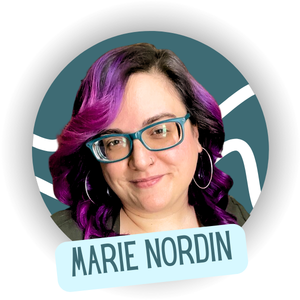
We also have Marie Nordin - PSF Staff from the PSF staff as a voting member of the workgroup. Marie provides crucial support and coordination, helping bridge our initiatives with the broader PSF mission and ensuring our work has the resources and visibility it needs to succeed. Her dedicated support and active participation have been instrumental in helping us move from discussion to action.
Looking Forward
The D&I Work Group can’t do this work alone. Real change happens when every Python developer, every community organizer, every person writing documentation or teaching a workshop thinks about inclusion in their own context.
You don’t need to join a work group to make a difference. You can:
In your local community: Start a Python meetup in your area. Make it beginner-friendly. Announce it in multiple languages if your region is multilingual. Choose accessible venues.
In your workplace: Mentor someone from a different background. Share knowledge with junior developers. Advocate for diverse hiring and inclusive team practices.
In your open source projects: Write clear documentation. Add examples that reflect different use cases. Make your contribution guidelines welcoming to newcomers. Consider what barriers might prevent someone from contributing.
In your daily work: Question assumptions. When you write code examples, ask: “Would this make sense to someone who doesn’t share my context?” When you organize an event, ask: “Who might feel excluded, and how can I change that?”
We all know that Python’s success isn’t just about the language. It’s about the community. And that’s the hard truth. The more diverse that community is, the more use cases we discover, the more creative solutions we find, the more people benefit from what we build together.
Diversity and inclusion work isn’t a side project or a “nice-to-have”. It’s how we ensure Python remains a language for everyone, everywhere. It’s how we make sure the next generation of developers (wherever they are, whatever their background) sees Python as a community they can be part of.
The work is hard. The progress is slow, and it’s often invisible. But it matters. Every small action compounds. Every person who chooses to be intentional about inclusion makes it easier for the next person.
That’s what keeps us going in the workgroup. That’s why we show up every month. If you want to learn more about the D&I Work Group, get involved, or share your own experiences with building inclusive communities, you can write to us at diversity-inclusion-wg@python.org.
We’re always learning, and we’d love to hear from you.
The Python Software Foundation (PSF) is excited to announce the introduction of the PSF Community Partner Program. This new program is designed as an “in-kind” way for us to support Python events and initiatives with non-financial assistance through the use of the PSF logo and name, as well as promotional support via sharing qualified posts on PSF official social media accounts. The PSF looks forward to supporting Python community events and initiatives through this new program!
The introduction of the PSF Community Partner Program grew out of our desire to find alternative ways to support the community during the pause of our Grants Program (read more about the resulting process below). Even so, we intend to continue offering this in-kind support program after the Grants Program reopens. Our big picture hope is that, over the long term, some community events and initiatives will continue to partner with the PSF while being financially dependent on sponsors and individual donors alone.
The PSF is also working on the future of our Grants Program, including when and how we can reopen it in a way that ensures the program’s long-term sustainability while balancing the needs of the Python community. In light of the truly staggering outpouring of support from our community during the 2025 year-end fundraiser, we are now in a stronger position to reopen the Grants Program and are eager to give back in a thoughtful and sustainable way. More updates to come!
As with the rollout of any new program, we anticipate small adjustments will need to be made for processes to flow smoothly and to ensure the program serves the Python community well. The PSF welcomes your comments, feedback, and suggestions regarding the new Community Partner Program on the corresponding Discuss thread. We also invite you to join our upcoming PSF Board or Grants Program Office Hour sessions to talk with the PSF Board and Staff synchronously. If you wish to send your feedback privately, please email grants@python.org.
How the program will work
The PSF Board delegated authority to the Grants Work Group (GWG) to review, approve, and deny applications for the Community Partner Program.
Similar to the PSF Grants Program, the PSF must ensure that applicants meet certain criteria before being approved as a Community Partner. To qualify, an event or initiative must:
Demonstrate a positive impact on the Python community
Be Python-specific or primarily Python-related
Have an established web presence, such as a dedicated website, Meetup page, or Luma page
Have an enforceable Code of Conduct with clear reporting mechanisms in place
Acknowledge and agree to the defined bounds of the Community Partner title as outlined in the application form
The PSF Community Partner application process begins with a one-page form designed to collect the information needed for review by the GWG. The form gathers:
Basic applicant details
Information about the event or initiative
Required acknowledgements related to trademark usage and an enforceable Code of Conduct
A couple questions to better understand the event or initiative, support evaluation, or help the PSF gather relevant metrics
Applicants are asked to submit their application at least six weeks before their event or initiative, with first-time applicants encouraged to apply eight weeks in advance. Applications may be submitted up to six months ahead of time, allowing the PSF to plan and provide timely promotional support. Once submitted, applications undergo an initial pre-review by PSF staff, who may follow up with clarifying questions as needed. The application will then be reviewed by the GWG, with consultation from the PSF Board in some cases and additional follow-up questions when necessary.
Decisions will be communicated via the email address provided in the application. Accepted Community Partners will receive guidance on PSF logo usage, social media re-sharing, and an invitation to provide an optional report.
How the program took shape
Upon the pause of the PSF Grants Program, the PSF Board and Staff set out to understand how we can continue to support Python events and initiatives for the duration of the program's pause. We dedicated Board and Grants Office Hour sessions, gathered input on a Discuss thread, tracked our social media replies to the pause announcement, and talked with community members one-on-one to get a picture of the various needs of our community. From there, PSF Staff compiled the feedback to identify the common threads to weave them together into action.
One of the most common themes uncovered is that while the financial assistance offered by our grants is incredibly valuable, the use of the PSF name that comes with grants also provides a strong signal of community trust–an official “stamp of approval”. This stamp of approval empowers Python events and initiatives to approach potential sponsors and is useful as a point of leverage and proof of trustworthiness to convince sponsors to sign on.
The next most common theme was that Python events and initiatives would greatly benefit from promotional support. This is a common benefit of “in-kind” partnerships and was a natural addition to the new PSF Community Partner Program. It’s also a bit of a tricky line for the PSF to navigate–as a 501(c)(3) non-profit based in the USA, we cannot raise funds for other organizations. That means we are implementing guidelines for what the PSF can and cannot promote to remain compliant with the requirements of the US federal tax code.
After identifying both of these recurring themes, PSF Staff put together a program proposal with input from the GWG and PSF Board. The process from there included review periods for the PSF Board, Staff, and GWG, integrating feedback, two votes from the PSF Board, and PSF Staff work on setting up processes and documentation.
About the Python Software Foundation
The Python Software Foundation is a US non-profit whose mission is to promote, protect, and advance the Python programming language, and to support and facilitate the growth of a diverse and international community of Python programmers. The PSF supports the Python community using corporate sponsorships, grants, and donations. Are you interested in sponsoring or donating to the PSF so we can continue supporting Python and its community? Check out our sponsorship program, donate directly, or contact our team at sponsors@python.org!
This year marks the ninth iteration of the official Python Developers Survey. We intentionally launched the survey in January (later than years prior) so that data collection and results can be completed and shared within the same calendar year. The survey aims to capture the current state of the Python language and its surrounding ecosystem. By comparing the results with last year’s, the community can identify emerging trends and gain deeper insight into how Python continues to evolve.
We encourage you to contribute to our community’s knowledge by sharing your experience and perspective. Your participation is valued! The survey should only take you about 10-15 minutes to complete.
This year we aim to reach even more of our community and ensure accurate global representation by highlighting our localization efforts:
The survey is translated into Chinese, French, German, Japanese, Korean, Portuguese, Russian, Spanish.
To assist individuals in promoting the survey and encouraging their local communities and professional networks we have created a Promotion Kit with images and social media posts translated into a variety of languages. We hope this promotion kit empowers folks to spread the invitation to respond to the survey within their local communities.
We’d love it if you’d share one or more of the posts in the Promotion Kit to your social media or any community accounts you manage, as well as share the information in Python related discords, mailing lists, or chats you participate in.
If you would like to help out with translations you see are missing, please request edit access to the doc and share what language you will be translating to. Translations for promotions into languages the survey may not be translated to is also welcome!
If you have ideas about what else we can do to get the word out and encourage a diversity of responses, please comment on the corresponding Discuss thread.
The survey is organized in partnership between the Python Software Foundation and JetBrains. After the survey is over, JetBrains will publish the aggregated results and randomly choose 20 winners (among those who complete the survey in its entirety), who will each receive a $100 Amazon Gift Card or a local equivalent.
This week will be my last as the Director of Infrastructure at the Python Software Foundation and my last week as a staff member. Supporting the mission of this organization with my labor has been unbelievable in retrospect and I am filled with gratitude to every member of this community, volunteer, sponsor, board member, and staff member of this organization who have worked alongside me and entrusted me with root@python.org for all this time.
But, it is time for me to do something new. I don’t believe there would ever be a perfect time for this transition, but I do believe that now is one of the best. The PSF has built out a team that shares the responsibilities I carried across our technical infrastructure, the maintenance and support of PyPI, relationships with our in-kind sponsors, and the facilitation of PyCon US. I’m also not “burnt-out” or worse, I knew that one day I would move on “dead or alive” and it is so good to feel alive in this decision, literally and figuratively.
“The PSF and the Python community are very lucky to have had Ee at the helm for so many years. Ee’s approach to our technical needs has been responsive and resilient as Python, PyPI, PSF staff and the community have all grown, and their dedication to the community has been unmatched and unwavering. Ee is leaving the PSF in fantastic shape, and I know I join the rest of the staff in wishing them all the best as they move on to their next endeavor.”
- Deb Nicholson, Executive Director
The health and wellbeing of the PSF and the Python community is of utmost importance to me, and was paramount as I made decisions around this transition. Given that, I am grateful to be able to commit 20% of my time over the next six months to the PSF to provide support and continuity. Over the past few weeks we’ve been working internally to set things up for success, and I look forward to meeting the new staff and what they accomplish with the team at the PSF!
My participation in the Python community and contributions to the infrastructure began long before my role as a staff member. As I transition out of participating as PSF staff I look forward to continuing to participate in and contribute to this community as a volunteer, as long as I am lucky enough to have the chance.
The PSF is pleased to announce its fourth batch of PSF Fellows for 2025! Let us welcome the new PSF Fellows for Q4! The following people continue to do amazing things for the Python community:
Thank you for your continued contributions. We have added you to our Fellows Roster.
The above members help support the Python ecosystem by being phenomenal leaders, sustaining the growth of the Python scientific community, maintaining virtual Python communities, maintaining Python libraries, creating educational material, organizing Python events and conferences, starting Python communities in local regions, and overall being great mentors in our community. Each of them continues to help make Python more accessible around the world. To learn more about the new Fellow members, check out their links above.
Let's continue recognizing Pythonistas all over the world for their impact on our community. The criteria for Fellow members is available on our PSF Fellow Membership page. If you would like to nominate someone to be a PSF Fellow, please send a description of their Python accomplishments and their email address to psf-fellow at python.org. We are accepting nominations for Quarter 1 of 2026 through February 20th, 2026.
Are you a PSF Fellow and want to help the Work Group review nominations? Contact us at psf-fellow at python.org.
We are thrilled to announce that Anthropic has entered into a two-year partnership with the Python Software Foundation (PSF) to contribute a landmark total of $1.5 million to support the foundation’s work, with an emphasis on Python ecosystem security. This investment will enable the PSF to make crucial security advances to CPython and the Python Package Index (PyPI) benefiting all users, and it will also sustain the foundation’s core work supporting the Python language, ecosystem, and global community.
Innovating open source security
Anthropic’s funds will enable the PSF to make progress on our security roadmap, including work designed to protect millions of PyPI users from attempted supply-chain attacks. Planned projects include creating new tools for automated proactive review of all packages uploaded to PyPI, improving on the current process of reactive-only review. We intend to create a new dataset of known malware that will allow us to design these novel tools, relying on capability analysis. One of the advantages of this project is that we expect the outputs we develop to be transferable to all open source package repositories. As a result, this work has the potential to ultimately improve security across multiple open source ecosystems, starting with the Python ecosystem.
Sustaining the Python language, ecosystem, and community
Anthropic’s support will also go towards the PSF’s core work, including the Developer in Residence program driving contributions to CPython, community support through grants and other programs, running core infrastructure such as PyPI, and more.
We couldn’t be more grateful for Anthropic’s remarkable support, and we hope you will join us in thanking them for their investment in the PSF and the Python community.
About Anthropic
Anthropic is the AI research and development company behind Claude — the frontier model used by millions of people worldwide.
About the PSF
The Python Software Foundation is a non-profit whose mission is to promote, protect, and advance the Python programming language, and to support and facilitate the growth of a diverse and international community of Python programmers. The PSF supports the Python community using corporate sponsorships, grants, and donations. Are you interested in sponsoring or donating to the PSF so we can continue supporting Python and its community? Check out our sponsorship program, donate directly here, or contact our team!